01
You fly for yourself
Flying stops being a daylight-only hobby. A Night Rating lets you operate safely and legally after dark, with greater flexibility in planning and conducting your flights.


Night Rating
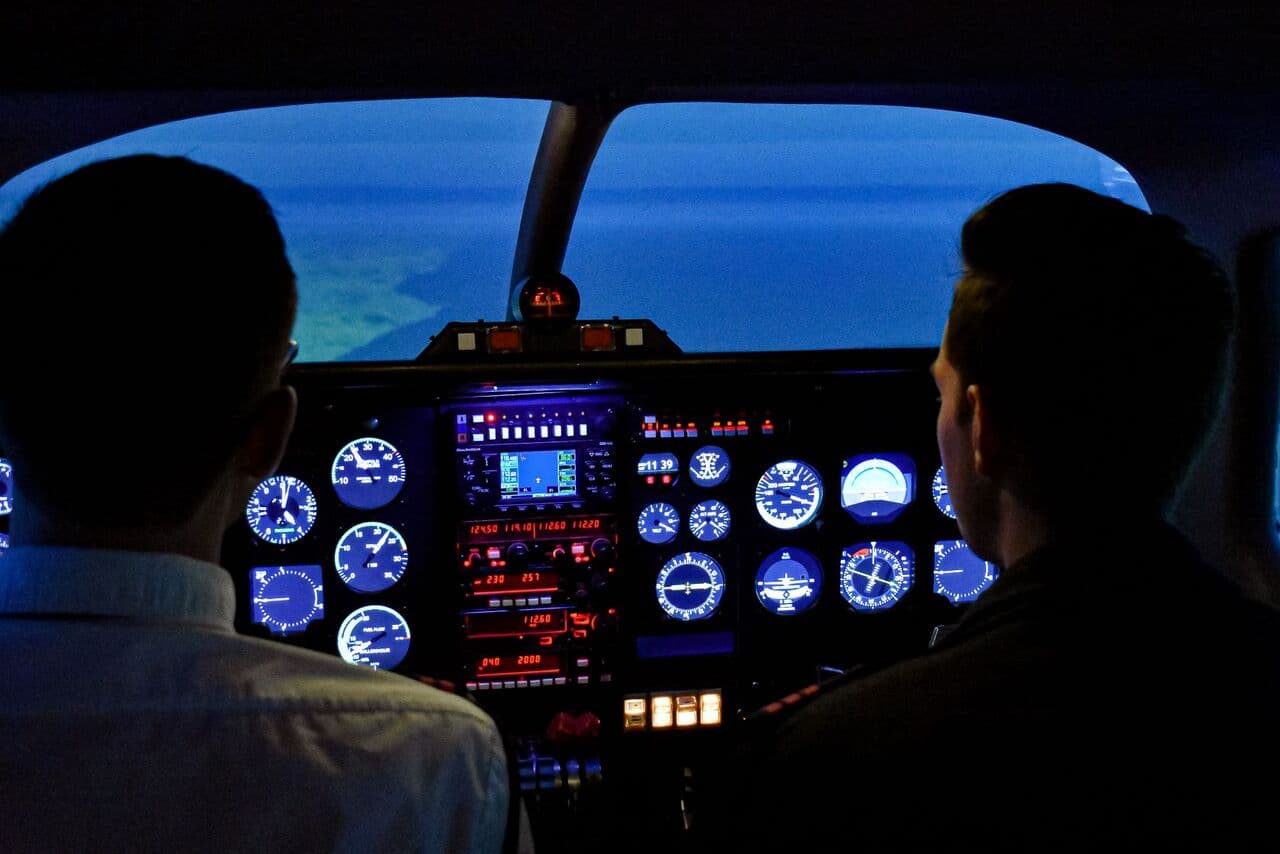
A Night Rating gives you the freedom to fly after sunset, opening the door to a whole new perspective of aviation under the stars — flying in visual conditions at night, with more flexibility in how you plan and fly.
Where to begin
Two kinds of pilot, for two different reasons — and the training is the same for both.
01
Flying stops being a daylight-only hobby. A Night Rating lets you operate safely and legally after dark, with greater flexibility in planning and conducting your flights.
02
It isn't optional. The Commercial Pilot Licence requires a valid Private Pilot Licence and Night Rating, so this is the next step after your PPL.
The licence itself
A rating is an endorsement added to the licence you already hold: it adds a privilege, it doesn't change the licence.
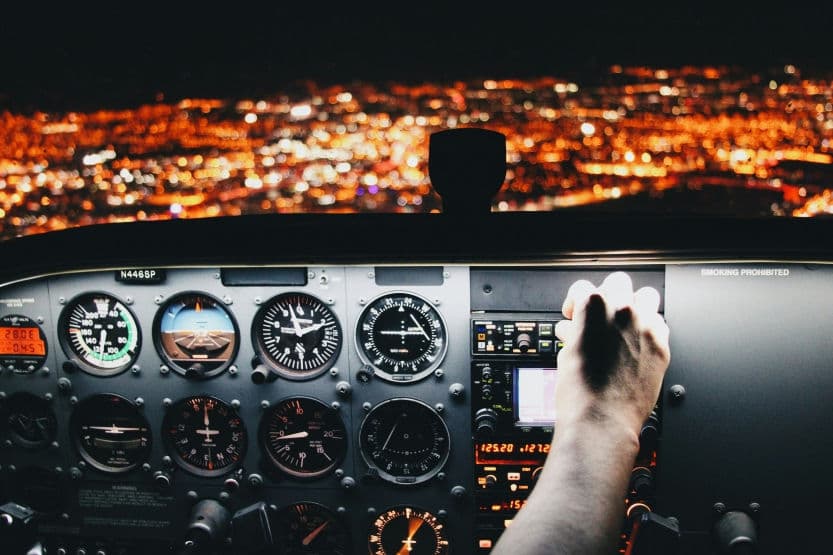
In aviation terms, night is defined as 15 minutes after sunset until 15 minutes before sunrise.
From your first night circuit to 150 miles in the dark
Four things to complete, all flown at night except the instrument work that prepares you for it.
Chapter 01
Step 01
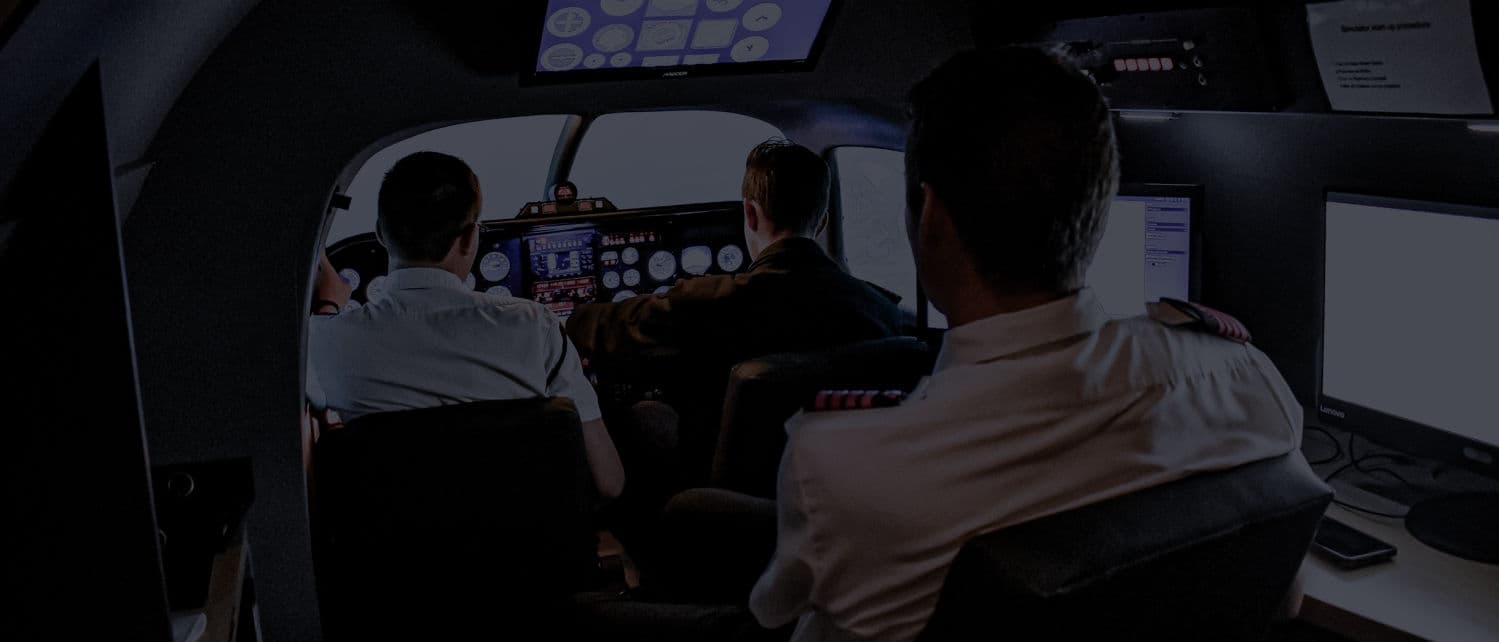
Flying accurately on instruments, for the moments when the horizon isn't there.
Milestone: 10 hours of instrument instruction
Ten hours of instrument instruction, of which not more than five hours may be accumulated in a flight simulator. Night flying removes the visual cues you have learned to rely on, so this comes first.
Chapter 02
Step 02
Judging height, approach and landing by lights instead of daylight.
Milestone: 5 take-offs and landings by night
Five take-offs and landings flown at night, until the circuit feels as familiar in the dark as it does in daylight.
Chapter 03
Step 03The moment it becomes yours
Navigating between aerodromes in the dark, including a controlled airport.
Milestone: 150 nautical miles, two full-stop landings
A night cross-country of at least 150 nautical miles, including two full-stop landings at different aerodromes and a controlled airport — the flight most pilots remember this rating by.
Chapter 04
Step 04
Showing that you can operate at night to the required standard.
Milestone: Online examination and practical test
An online examination, then a practical night flight test with a Grade II Instructor.
These are the requirements the rating is issued against — your instructor will plan the order with you.
No surprises
What you need before you start, what you fly during the rating, and what's required before it's issued.
01
What the rating is added to.
Hold a valid Private Pilot Licence (PPL)
Licence requirement02
What you complete with Eagle Air.
10 hours of instrument instruction
Of which not more than 5 hours may be accumulated in a flight simulator.
Licence requirement5 take-offs and landings by night
Licence requirementA night cross-country of at least 150 nautical miles
Including two full-stop landings at different aerodromes, and a controlled airport.
Licence requirement03
The examination and the test.
Pass an online examination
Licence requirementPass a practical night flight test with a Grade II Instructor
Licence requirementLicence requirement is set by the regulator; Eagle Air guidance is our own advice, not a condition of entry.
Honest numbers
Eagle Air doesn't publish a timeframe for the Night Rating, so this page doesn't invent one. The hours listed are what the rating requires, not how long it will take you.
What it costs
No price is published for the Night Rating. The team will tell you what it costs for the hours you actually need.
The hours you fly
10 hours of instrument instruction, 5 night take-offs and landings, and a 150 nm night cross-country are the requirements.
Simulator or aircraft
Up to 5 of the 10 instrument hours may be flown in the simulator rather than the aircraft.
The cross-country itself
At least 150 nautical miles with full-stop landings at two different aerodromes, one of them a controlled airport.
What Eagle Air includes and what you arrange yourself is confirmed with the training team.
The horizon after this one
Where a night qualification usually leads.
Next · 01
With a PPL and Night Rating in hand, this is the licence that lets you fly for a living.
Next · 02
Flying in cloud and low visibility, on instruments alone. It asks for a PPL with a Night Rating, or a CPL.
Next · 03
Hire aircraft and build experience, now with the night hours to go with it.
Your first step
Tell us where you are — your licence, your hours and whether this is for pleasure or the next step of a career — and the training team will plan the rating around you.