
Eagle Air
Skip to content

Commercial Pilot Licence (CPL)

The licence that turns flying into your profession.

A Commercial Pilot Licence lets you fly as pilot-in-command for compensation or hire, carrying passengers or cargo. It's the step from recreational flying to professional responsibility — and to earning an income in the air.

Starting point
PPL with a Night Rating
And a valid Class 1 medical certificate.
Flying time
Minimum 200 hours
Including 100 hours pilot-in-command — minimums, not a forecast.
Eagle Air's guidance
Approximately 15–18 months
The FAQ puts the average nearer 24 months.
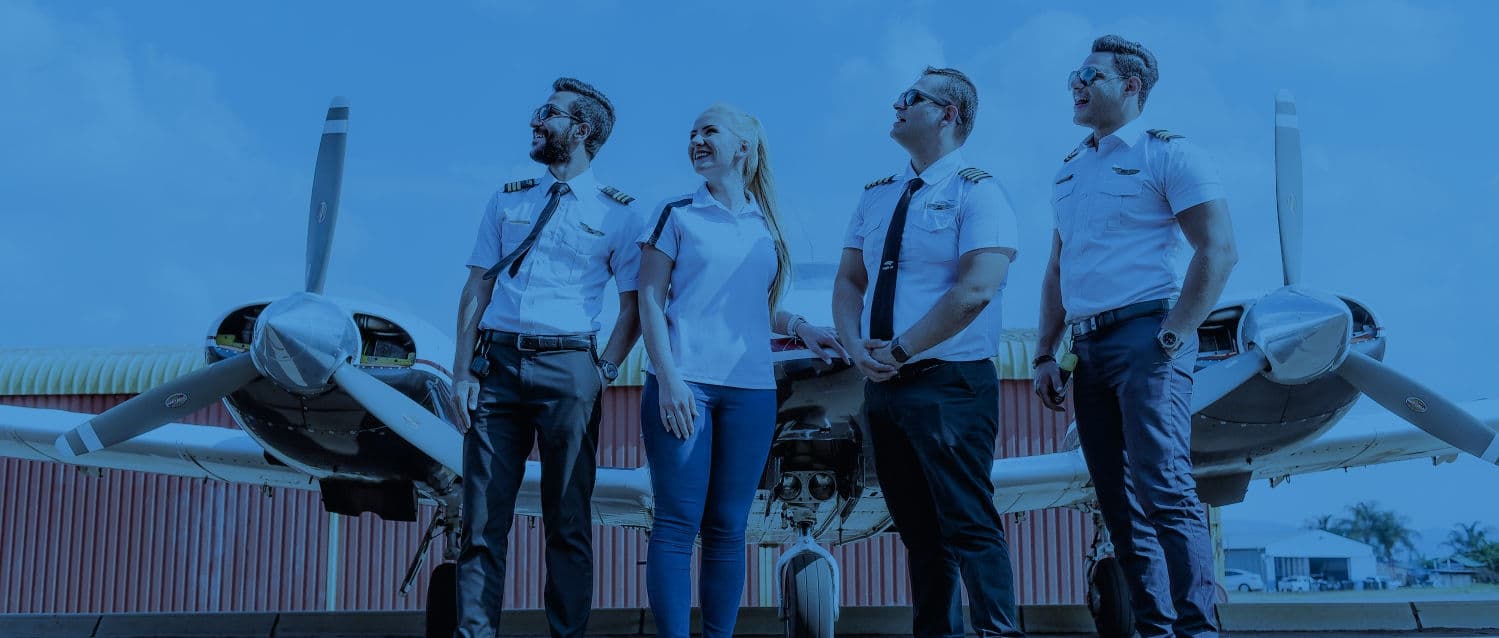
Four Eagle Air pilots standing together beside an aircraft under a blue sky

Where to begin

With an Instrument Rating, or without?

The CPL comes in two forms, and the difference decides how much cross-country and instrument flying you need. Most commercial flying is conducted under Instrument Flight Rules, so most professional pilots take the first route.

01

CPL with an Instrument Rating

Needs 50 hours cross-country and 40 hours instrument flight time, of which up to 20 may be flown in the simulator. Most airline and commercial operations are flown under Instrument Flight Rules (IFR), so this is the usual professional route.

See the requirements for this route

02

CPL without an Instrument Rating

Needs 20 hours cross-country and 20 hours instrument flight time, of which up to 10 may be flown in the simulator. You can add the Instrument Rating later.

See the requirements for this route

The licence itself

What a CPL lets you do

The licence that changes flying from something you pay for to something you're paid for.

With a CPL you can

  • Operate an aircraft as pilot-in-command for compensation or hire
  • Carry passengers or cargo commercially
  • Earn an income as a pilot, across a range of sectors in the industry
  • Add an Instructor Rating and teach student pilots while you build experience

Not until you train further

  • Fly for remuneration outside a valid operator's certificate
  • Act as pilot-in-command of multi-crew airliners — that is the Airline Transport Pilot Licence
  • Instruct until you hold an Instructor Rating

A licence is not a job. Some airlines recruit low-hour commercial pilots as Second or First Officer depending on operational demand and their own criteria; many pilots instruct, fly charter or work in neighbouring countries first.

A light twin taxiing past the Eagle Air hangar in daylight

From a private licence to a professional standard

How you earn it

From your private licence to a professional standard: theory, hours, instruments and a test flown in both the aircraft and the simulator.

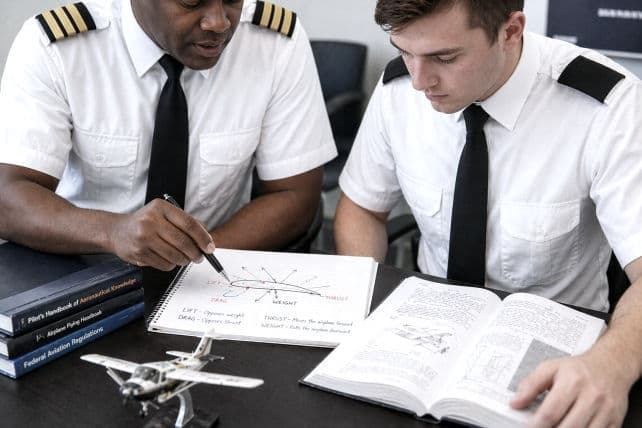
  1. Two student pilots in uniform working through a flight-planning exercise together

    Chapter 01

    You already hold a licence

    1. Step 01

      Start from your PPL and Night Rating

      Where the commercial route begins, and what has to be in place first.

      Milestone: Class 1 medical certificate

      Commercial training builds on a valid Private Pilot Licence and Night Rating. A Class 1 medical certificate is the standard for professional flying, so it's the first thing to arrange.

    2. Step 02

      Commercial ground school and examinations

      The deeper theory a professional pilot is held to.

      Milestone: Commercial theoretical examinations

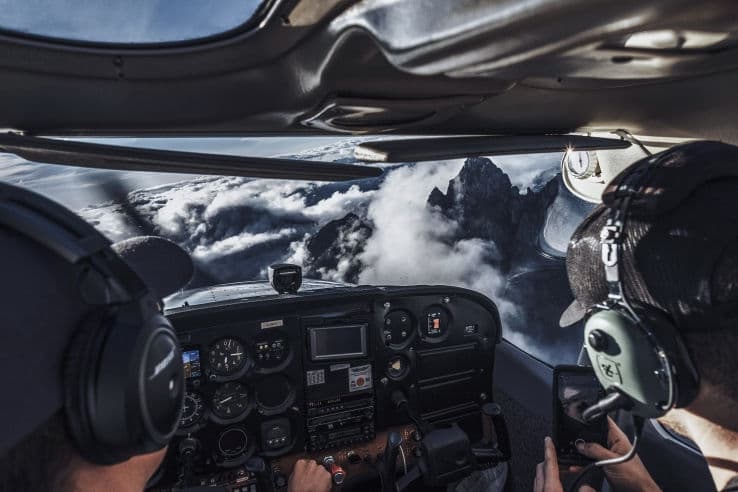
  2. The view past a pilot's headset over a layer of cloud on a cross-country flight

    Chapter 02

    The hours that make a commander

    1. Step 03

      Hour building through cross-country flying

      Real command experience: planning, navigating and deciding for yourself.

      Milestone: 200 hours total, 100 as pilot-in-command

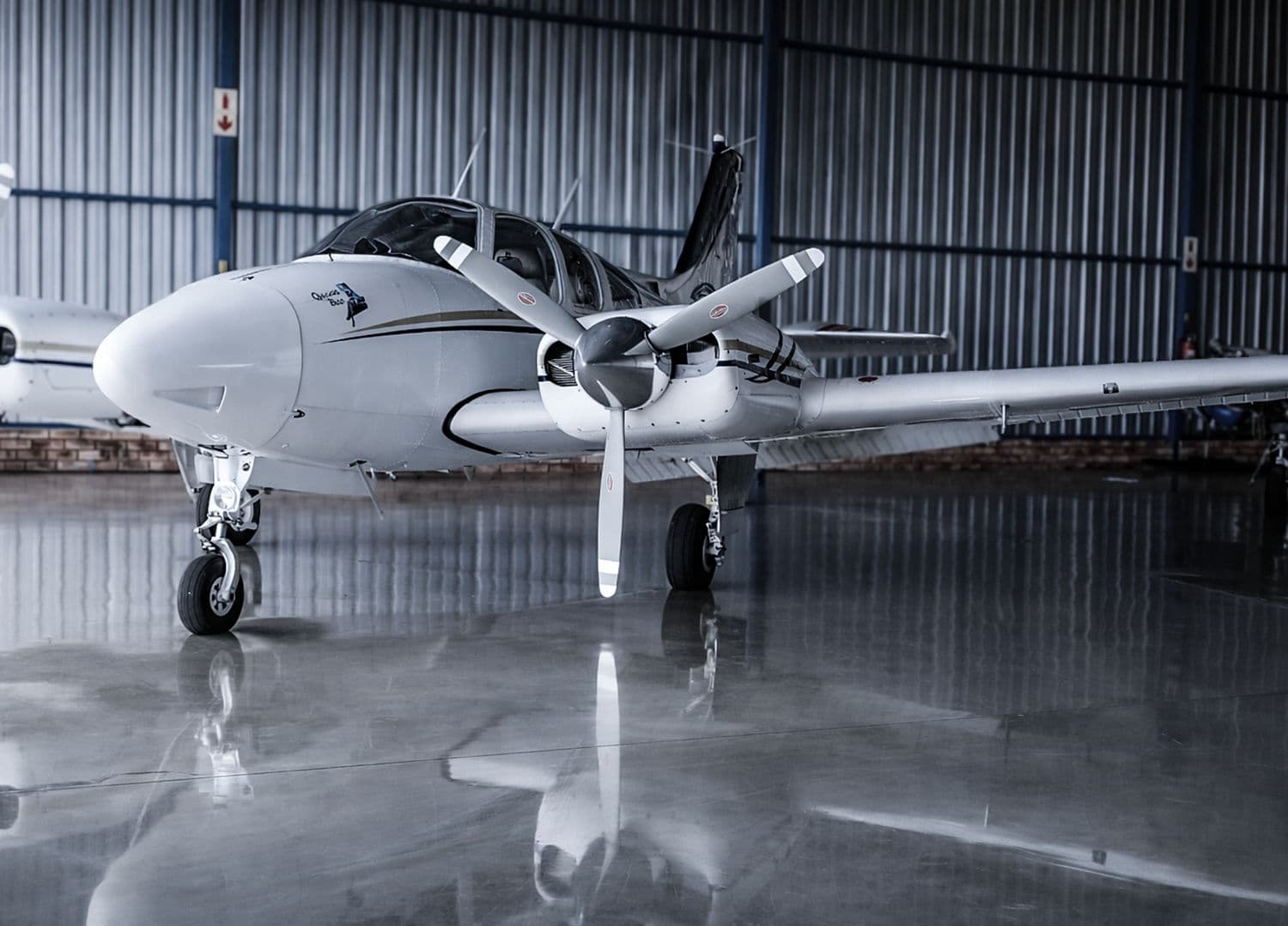
  3. A Beechcraft Baron 55 on the polished hangar floor

    Chapter 03

    Instruments, and a second engine

    1. Step 04

      Instrument training

      Flying accurately on instruments alone, without outside visual references.

      Milestone: 40 hours instrument time (20 without the IF rating)

    2. Step 05

      Multi-engine training

      Handling a larger, more complex aircraft with two engines.

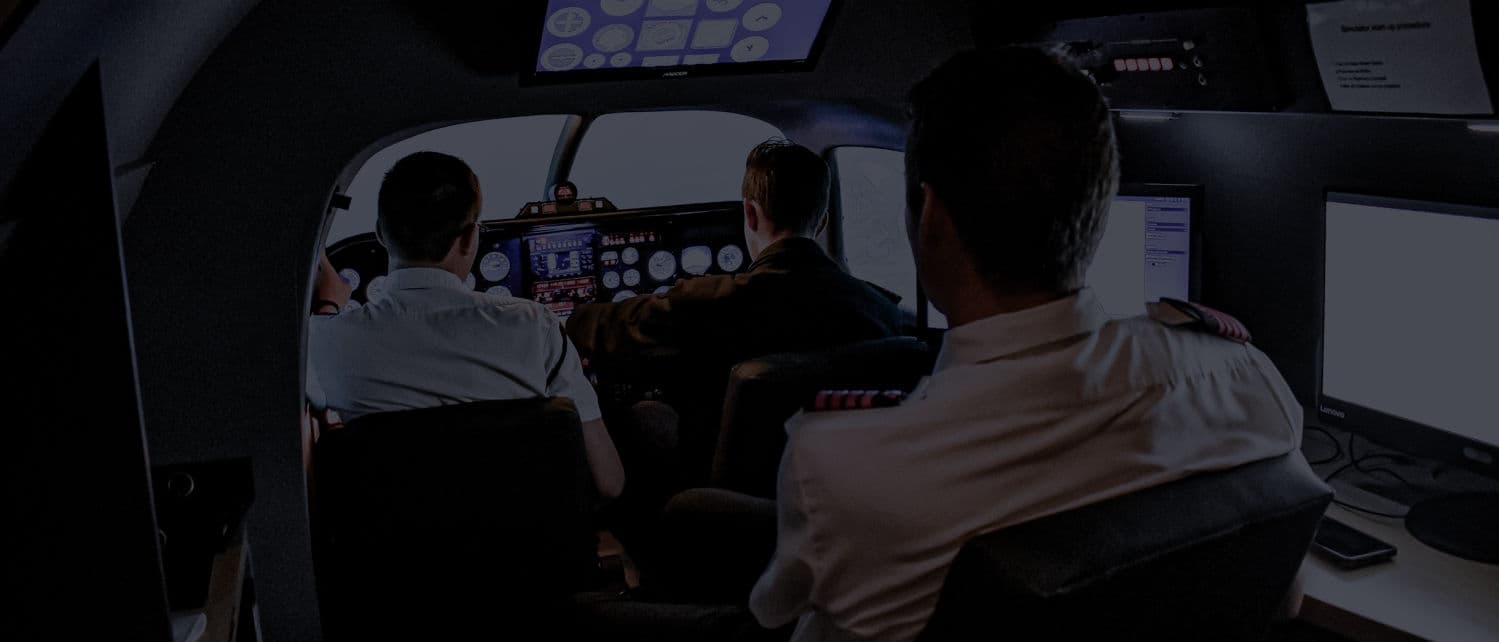
  4. Two pilots training together in the flight simulator

    Chapter 04

    Flown to a professional standard

    1. Step 06The moment it becomes yours

      The final flight test

      Demonstrating professional standards, in the air and in the simulator.

      Milestone: CPL skills test

Running alongside your flying

General Radiotelephony

The advanced radio licence for controlled airspace and professional operations — required before the Instrument Rating.

Class 1 medical, kept current

Professional flying is held to the Class 1 medical standard, renewed at the required intervals.

Minimum hours apply and may vary based on individual progress.

Knowledge, handling and judgement

What you'll learn

Advanced skills, deeper knowledge and the operational responsibility a commercial cockpit carries.

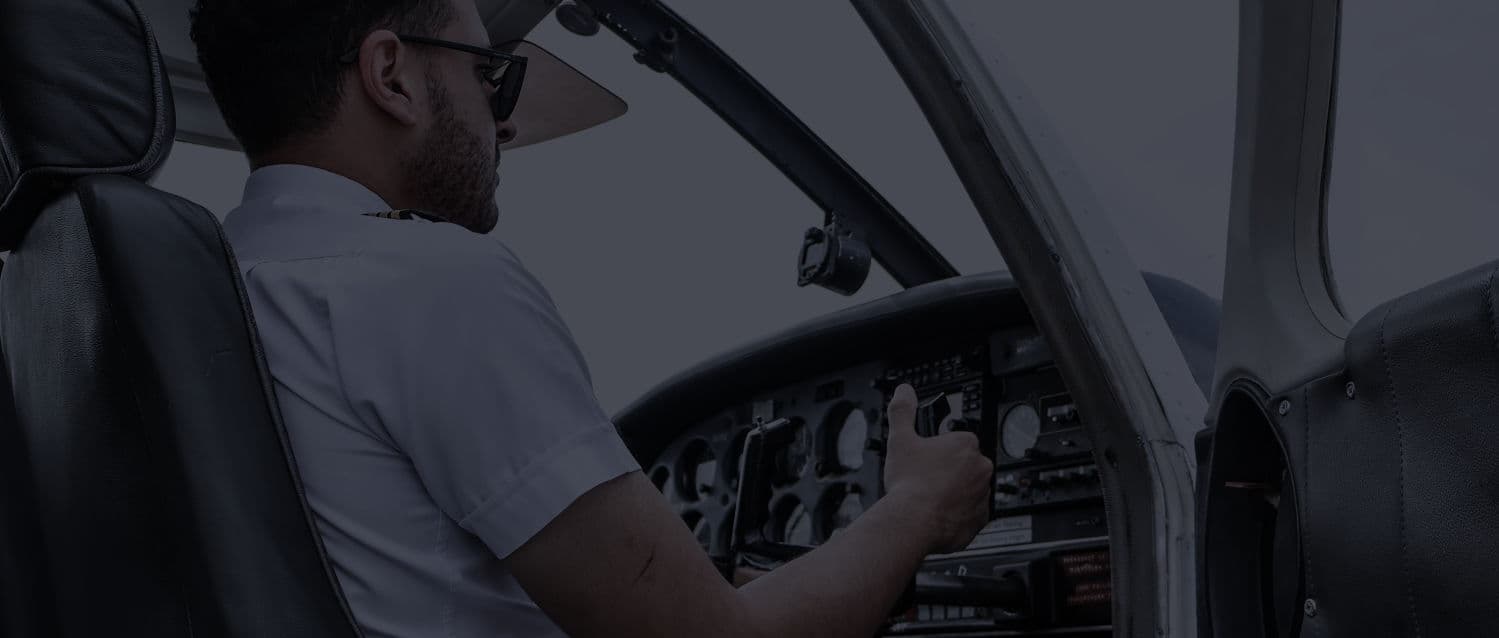
An instructor at the controls of a training aircraft, lit by the instrument panel
  1. Understand: The commercial theory syllabus, examined before you can hold the licence.

    • Commercial theoretical examinations
    • Air law
    • Meteorology
    • Navigation and flight planning
    • Human performance
    • Aircraft technical knowledge
  2. Handle: More aircraft, more systems: from single-engine trainers to twins.

  3. Fly on instruments: Precise flying with no outside references — the skill most commercial operations depend on.

  4. Navigate: Long cross-country flying as pilot-in-command, including at night.

  5. Decide: The judgement and operational responsibility a commercial environment expects.

No surprises

What it takes

Three different things, kept apart: what you need before you start, what you complete during training, and what's required before the licence is issued. Two of the hour requirements depend on which route you take.

Show the route for

Both routes stay listed below — choosing one marks the hours that belong to it.

01

Before you start

What you need in place to begin commercial training.

  • Hold a valid Private Pilot Licence and Night Rating

    Licence requirement
  • Hold a valid Class 1 Medical Certificate

    The professional standard, issued by an approved aviation medical examiner.

    Licence requirement

02

During your training

What you complete with Eagle Air.

  • Complete the commercial theoretical examinations

    Licence requirement
  • A minimum of 200 hours total flying time

    Licence requirement
  • A minimum of 100 hours as pilot-in-command

    Licence requirement
  • A minimum of 5 hours as pilot-in-command by night

    Licence requirement
  • A minimum of 50 hours cross-country

    For the CPL with an Instrument Rating.

    Licence requirementCPL with an Instrument Rating — the route you selected
  • A minimum of 20 hours cross-country

    For the CPL without an Instrument Rating.

    Licence requirementCPL without an Instrument Rating
  • A minimum of 40 hours instrument flight time

    Of which up to 20 hours may be flown in a simulator. For the CPL with an Instrument Rating.

    Licence requirementCPL with an Instrument Rating — the route you selected
  • A minimum of 20 hours instrument flight time

    Of which up to 10 hours may be flown in a simulator. For the CPL without an Instrument Rating.

    Licence requirementCPL without an Instrument Rating

03

Before your licence is issued

The final requirements for the licence itself.

  • Be at least 18 years of age

    Licence requirement
  • Pass the final flight test, in the aircraft and the simulator

    Licence requirement

Licence requirement is set by the regulator; Eagle Air guidance is our own advice, not a condition of entry. Hours marked with a route apply only to that version of the licence.

Honest numbers

How long it takes

Approximately 15–18 months

Eagle Air’s own guidance · CPL page — how it works

On average, a Commercial Pilot Licence typically takes around 24 months. (FAQ — how long does it take)

What changes it

How often you fly
Hour building is the bulk of this licence, and it moves at the pace you fly.
Full-time or part-time
Part-time training is available, and generally extends the overall duration.
How quickly you complete the exams
The rate at which the commercial theoretical examinations are completed shapes the timeline.
Individual aptitude
Minimum hours apply and may vary based on individual progress.

200 hours is the legal minimum, not a plan. Eagle Air's own guidance says 15–18 months while the FAQ puts the average nearer 24 — both are shown here because your pace decides which is true for you.

What it costs

What it costs

No CPL price is published, because the honest total is driven by the hours you fly — and this licence is mostly hours. The team will build you an estimate around your route.

What drives the total

  • The hours you actually fly

    200 hours total and 100 as pilot-in-command are the floor; minimum hours apply and may vary based on individual progress.

  • With or without an Instrument Rating

    The IF route needs 50 hours cross-country and 40 hours instrument time instead of 20 and 20 — a real difference in flying.

  • Aircraft and simulator time

    Multi-engine training is flown on the twins, and up to half your instrument time may be flown in the FNPT II simulator.

Alongside the flying

  • Your Class 1 aviation medical, issued by an approved aviation medical examiner
  • SACAA examinations and the final flight test
  • The General Radiotelephony licence, required before the Instrument Rating

What Eagle Air includes and what you arrange yourself is confirmed with the training team.

Common questions

The horizon after this one

After your CPL

A licence that earns, and three ways pilots build on it.

  1. Next · 01

    Instructor Rating

    Teach student pilots, build hours and develop the professionalism employers look for.

    Detailed page coming soon

    Speak to the Training Team

See every course in the training hub

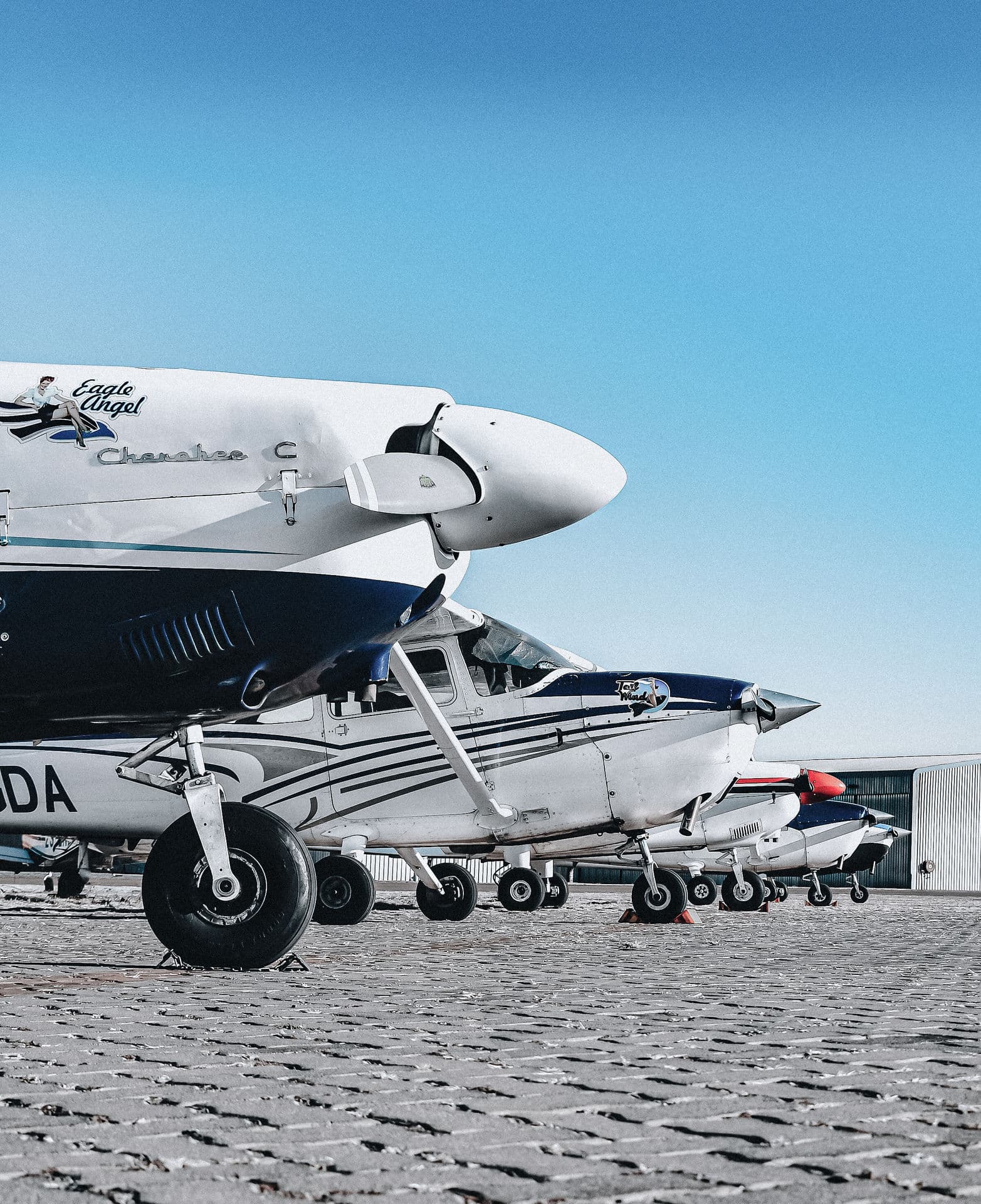
The nose and propeller of an Eagle Air Piper against a clear blue sky

Your first step

You do not need the whole career mapped out. Just the next qualification.

Tell us the licence you hold, the hours you've flown and where you want to end up. The Eagle Air team can help you plan a realistic route to your commercial licence.